
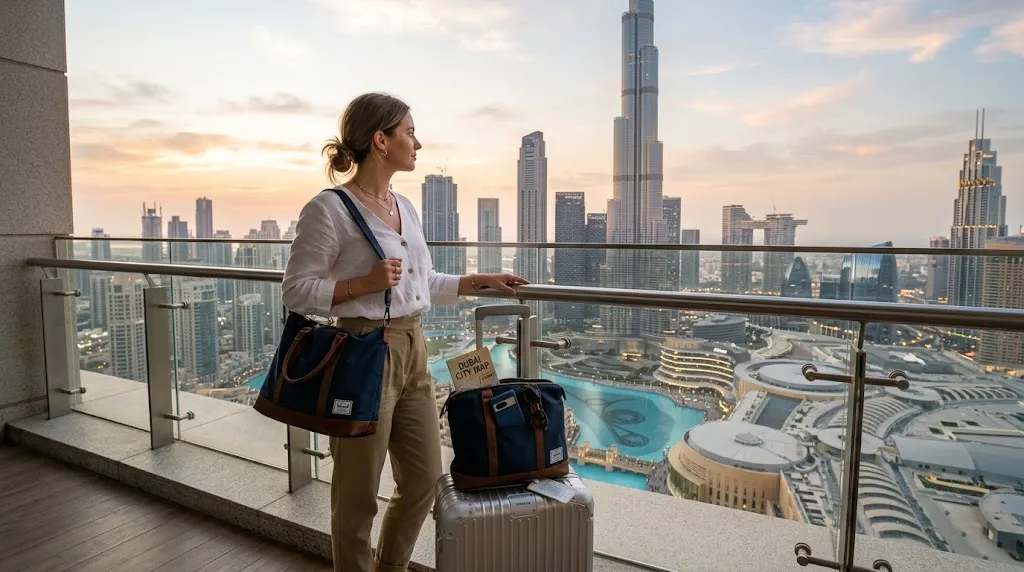
Dubai is a popular destination for its impressive skyline, traditional markets, beaches, shopping districts, and cultural experiences. If you are visiting for the first time, a little preparation can help you make better use of your time, manage your spending, and avoid common travel mistakes.
These Dubai travel tips cover the essentials, from preparing your documents and choosing accommodation to using public transport, respecting local customs, and planning your sightseeing. Whether you are visiting for a short break or a longer holiday, use this guide to prepare for a smoother trip.
If you are deciding what to see first, our 3-day Dubai itinerary for first-time visitors can help you organise your days.
1. Check Your Travel Documents Before Departure
Before booking activities or packing your suitcase, make sure you understand the entry requirements that apply to your nationality and circumstances.
Check the following:
- Passport validity requirements for your journey
- Whether you need a visa or other entry permission
- Flight booking details
- Accommodation confirmation
- Travel insurance, if you have it
- Any additional documents required for your circumstances
Visa and entry rules can vary depending on nationality, residence status, and the purpose of travel. Confirm the applicable requirements before departure rather than relying on another traveller’s experience.
Keep copies of important documents in a secure place. Digital copies can be useful as a backup, but they do not replace original documents when those are required.
2. Choose the Right Time to Visit Dubai
The best time for your trip depends on your preferred activities, weather comfort, budget, and tolerance for crowds.
The cooler months, generally around November to March, are often more comfortable for walking around outdoor attractions, exploring traditional neighbourhoods, and visiting beaches. The weather can still vary, so check the forecast for your travel dates.
During the hotter months, outdoor activities may be more demanding. Consider sightseeing early or later in the day, taking breaks, and spending the warmest hours in indoor attractions.
Seasonal events, public holidays, and school breaks can also influence hotel prices and crowd levels. If your dates are flexible, compare accommodation options before making a final decision.
For more seasonal planning advice, read our guide to the best places to visit in the UAE in December.
3. Plan Your Budget Before You Arrive
Dubai offers a range of experiences for different budgets, but costs can increase quickly if you book several premium attractions, choose expensive accommodation, or rely on taxis for every journey.
Create a basic spending plan with separate amounts for:
- Accommodation
- Food and drinks
- Public transport and taxis
- Paid attractions and activities
- Shopping and souvenirs
- Travel insurance and other relevant expenses
- An emergency reserve
Decide which paid experiences matter most to you. You can balance them with free or lower-cost activities, such as public beach visits, waterfront walks, and exploring neighbourhoods.
Remember to compare the total cost of an activity rather than just its advertised starting price. Transport, optional extras, and booking conditions can affect what you actually spend.
Our Dubai travel budget guide explains the main cost categories and practical ways to plan your spending.
4. Choose Accommodation Based on Your Plans
Where you stay can affect both your budget and the amount of time you spend travelling around the city.
Consider these broad options:
- Downtown Dubai: Useful for visitors who want to explore major modern landmarks and shopping areas.
- Deira and Bur Dubai: Worth considering if you are interested in Old Dubai, traditional markets, and access to public transport.
- Dubai Marina and Jumeirah Beach Residence: May suit travellers who enjoy waterfront walks, cafés, and a coastal atmosphere.
Before booking, check how far the accommodation is from the places you plan to visit. Also consider transport connections, the total price, cancellation terms, and whether breakfast or other facilities are included.
A cheaper room may not be the best value if it adds substantial travel time or transport costs. On the other hand, staying directly beside a major attraction may not be necessary if public transport is convenient.
For a more detailed comparison, read our guide on where to stay in Dubai.
5. Learn How Dubai’s Public Transport Works
Dubai’s transport options include the Metro, buses, taxis, and other services. The best option depends on your destination, luggage, travel time, and budget.
Use the Metro Where Practical
The Metro can be a convenient way to travel between several major areas. However, some attractions are not directly beside a station, so you may need to walk or use another transport option for part of the journey.
Plan your route before leaving and check current operating hours and fares.
Understand Nol Cards
Nol cards are used for eligible public transport services in Dubai. Check the current card options, fare rules, and balance requirements before travelling.
For a practical introduction, read our Dubai public transport guide for tourists.
Use Taxis When They Make Sense
Taxis can be helpful when travelling with luggage, visiting places away from convenient transport connections, or returning late. However, frequent taxi journeys can increase your total spending.
Compare the expected journey time and cost before deciding. A combination of public transport, walking, and occasional taxis may work well for many visitors.
6. Plan Your Journey from the Airport
If you arrive at Dubai International Airport, decide how you will reach your accommodation before landing.
Your choice may depend on:
- Your hotel location
- Arrival time
- Amount of luggage
- Number of travellers
- Public transport availability
- Your budget
The Metro may be suitable for some routes and arrival times, while a taxi may be more convenient for travellers with heavy luggage or accommodation far from a station.
Allow extra time if you arrive during a busy period or need to collect luggage. Keep your hotel address and booking details accessible so you can organise your onward journey easily.
Our guide on how to get from Dubai Airport to the city covers the main transport options.
7. Dress Comfortably and Respect Local Customs
Dubai is an international destination, but it is important to be considerate of local customs and the expectations of the places you visit.
Choose clothing that suits the weather and your activities. At religious and cultural sites, more modest clothing may be required, so check the specific rules before arriving.
A light layer can be useful in air-conditioned shopping centres, restaurants, and other indoor spaces. Comfortable walking shoes are also helpful if you plan to explore markets or spend several hours sightseeing.
Follow posted guidance at attractions and ask staff if you are unsure about clothing or photography rules. Be respectful when photographing other people, particularly in cultural or religious settings.
8. Pack for the Weather and Your Activities
Your packing list should match the season and the places you intend to visit.
Useful items for many trips include:
- Lightweight, comfortable clothing
- Walking shoes
- Sunglasses and a hat
- Sunscreen
- A suitable travel adapter
- Phone charger and power bank, packed according to airline rules
- Essential documents
- Personal medication and relevant documentation, where applicable
- Swimwear if you plan to visit a beach or pool
- A light layer for indoor air-conditioning or cooler evenings
Check the forecast before departure and review your airline’s baggage rules. You do not need to pack specialist equipment for activities you have not decided to do.
For a complete checklist, see our Dubai packing list.
9. Balance Famous Attractions with Local Experiences
Dubai’s famous landmarks are worth considering, but your trip does not need to consist entirely of ticketed attractions.
You can combine modern districts with Old Dubai, traditional markets, public beaches, and waterfront walks. This approach gives you a broader experience of the city and can help you manage your budget.
For a first visit, you might consider:
- Downtown Dubai and the Burj Khalifa area
- Dubai Mall and nearby public spaces
- Al Fahidi Historical Neighbourhood
- Dubai Creek and the traditional souks
- A public beach or coastal walk
- Dubai Marina
Choose attractions that match your interests rather than trying to visit every popular location. Check opening hours, access conditions, ticket prices, and travel time before committing to a schedule.
Our guides to the best places to visit in Dubai and the best free places to visit in Dubai can help you compare options.
10. Book Popular Activities Carefully
Some attractions and tours can be busy during peak periods or use timed entry. Booking in advance may help you secure a preferred time, but always read the terms before paying.
Before making a booking:
- Confirm the date and start time
- Check the meeting or entry location
- Review what is included in the price
- Read cancellation and refund conditions
- Check age, clothing, or other participation requirements
- Allow enough time to reach the venue
Avoid booking activities too close together, especially when they are in different parts of the city. Traffic, queues, and transport changes can affect your schedule.
For a short visit, leave some unplanned time in your itinerary. This makes the trip easier to adjust if you discover a place you want to explore for longer.
11. Keep Safety and Personal Belongings in Mind
As with any destination, basic awareness can help you travel more comfortably.
Keep your passport, payment cards, phone, and other valuables secure. Be especially mindful of your belongings in crowded markets, shopping areas, and busy transport stations.
Use established transport options, follow safety instructions at attractions, and avoid entering restricted areas. If an activity involves water, desert terrain, or other specific risks, follow the operator’s instructions and check whether the activity is suitable for you.
Save important contact information and keep your phone charged. Travel insurance may also be worth considering depending on your circumstances and planned activities.
If you need medication during your trip, check applicable requirements before carrying it into the country. Some medicines may be subject to specific rules, so do not assume every product is treated the same way.
12. Be Mindful of Local Laws and Public Behaviour
Visitors should familiarise themselves with local laws and follow instructions from authorities and venue staff.
Be respectful in public spaces, avoid confrontational behaviour, and check rules before taking photographs of people or sensitive locations. Regulations may differ from those in your home country, so do not rely solely on what is customary elsewhere.
If you are unsure about a rule, look for official guidance relevant to your situation or ask an appropriate authority. This is especially important for matters involving medication, public conduct, photography, and legal requirements.
Being prepared and respectful can help prevent avoidable problems during your visit.
13. Save Time by Grouping Attractions by Area
Dubai covers a large area, so travelling back and forth between distant neighbourhoods can waste valuable sightseeing time.
A simple way to plan is to group nearby attractions on the same day. For example:
- Downtown day: Focus on Downtown Dubai, Dubai Mall, and nearby sights.
- Old Dubai day: Explore Al Fahidi, Dubai Creek, and the traditional souks.
- Coastal day: Consider a beach visit and Dubai Marina.
This is only an example; adjust it according to your interests, weather, and accommodation location.
If you have three days available, our 3-day Dubai itinerary provides a more detailed day-by-day plan.
14. Keep Payment Options Ready
Before travelling, check which payment methods you can use abroad and whether your bank charges foreign transaction fees.
Consider bringing a suitable bank card and a reasonable backup payment method. Keep cash secure if you choose to carry it, and avoid displaying large amounts in crowded places.
Notify your bank before travel if it recommends doing so, and make sure you can access your account if you need to verify a transaction. If you are travelling with family or friends, agree in advance how shared expenses will be handled.
Keep track of small purchases as well as major costs. Food, transport, snacks, and spontaneous activities can add up over several days.
15. Common Mistakes First-Time Visitors Should Avoid
A few simple planning mistakes can make a trip more tiring or expensive than necessary.
Trying to see everything in one day: Choose a manageable number of attractions and leave time for meals, rest, and travel.
Ignoring travel time: Check distances and routes before booking activities in different areas.
Packing unsuitable clothing: Consider both outdoor weather and indoor air-conditioning, as well as clothing expectations at cultural sites.
Forgetting extra costs: Include transport, food, optional extras, and a reserve in your budget.
Assuming entry requirements are the same for everyone: Verify the rules that apply to your passport and travel circumstances.
Leaving all bookings until the last minute: For popular activities or busy travel dates, check availability and terms in advance.
Following an itinerary too rigidly: Weather, queues, and personal preferences can change your plans. Keep room for adjustments.
Frequently Asked Questions
What should first-time visitors know before travelling to Dubai?
Check your entry requirements, choose accommodation that suits your itinerary, understand your transport options, plan a realistic budget, and learn the local expectations for clothing and public behaviour.
How many days do you need in Dubai?
Three days can provide a good introduction to major landmarks, Old Dubai, and a coastal area. A longer visit gives you more time for additional attractions, shopping, day trips, or a slower pace.
Is Dubai easy to explore without a car?
Yes, selected areas can be explored using the Metro, buses, taxis, and walking. The best combination depends on where you stay and which attractions you plan to visit.
What is the best time of year to visit Dubai?
Many visitors prefer the cooler months, roughly November to March, for outdoor sightseeing. Check the actual forecast and compare accommodation prices for your dates before booking.
How can I save money on a Dubai trip?
Set a budget before departure, compare accommodation areas, use public transport where practical, and mix paid attractions with free activities. Plan your route to reduce unnecessary travel between distant locations.
What should I pack for Dubai?
Bring comfortable clothing, walking shoes, sun protection, travel documents, electronics, a suitable plug adapter, and personal essentials. Add beach or activity-specific items based on your plans and the weather.
Final Thoughts
A successful first visit to Dubai starts with practical preparation. Check your documents, choose a convenient place to stay, plan your transport, pack for the weather, and select attractions that suit your interests and budget.
You do not need to fill every hour to enjoy the city. By grouping attractions by area, respecting local customs, and leaving room for unexpected discoveries, you can make your visit more comfortable and memorable.
Use these Dubai travel tips alongside our detailed itinerary, transport, accommodation, packing, and budget guides to plan your trip with confidence.