
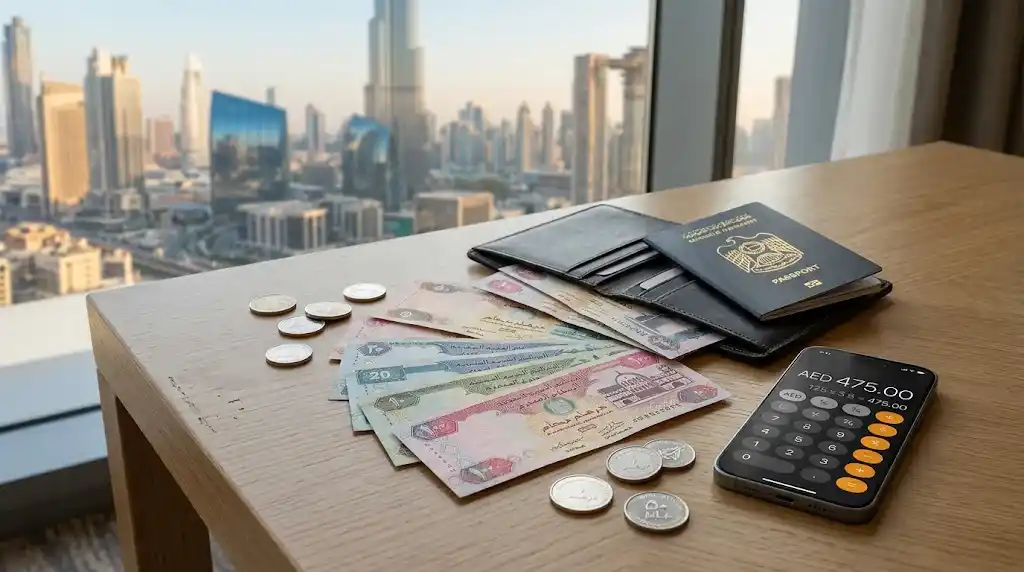
Planning a trip to the United Arab Emirates involves more than choosing hotels and attractions. You should also understand how money works in the country before you arrive. Knowing the local currency, payment methods, and currency exchange options can make everyday travel expenses easier to manage.
The official currency of the United Arab Emirates is the UAE dirham, commonly written as AED or د.إ. Whether you are visiting Dubai, Abu Dhabi, Sharjah, or another emirate, you will use the dirham for most everyday purchases.
Tourists can generally pay using cash or bank cards, depending on the business and payment facilities available. ATMs and currency exchange services are also available in many busy areas.
This UAE currency guide for tourists explains the dirham, banknotes, coins, money exchange, ATM withdrawals, card payments, and practical ways to manage your travel budget.
What Is the Currency of the UAE?
The official currency of the United Arab Emirates is the UAE dirham (AED).
The dirham is used throughout all seven emirates:
- Abu Dhabi
- Dubai
- Sharjah
- Ajman
- Umm Al Quwain
- Ras Al Khaimah
- Fujairah
You do not need a different currency when travelling from Dubai to Abu Dhabi or between other emirates.
One dirham is divided into 100 fils. You may see prices displayed using AED, Dhs, or the dirham symbol depending on the business.
When checking prices, make sure you understand whether the amount is shown in dirhams and whether any additional charges apply.
UAE Dirham Banknotes and Coins
The UAE dirham is available in both banknotes and coins.
Common UAE Banknotes
Dirham banknotes are used for everyday cash payments. Different denominations are available, allowing people to pay for both smaller and larger purchases.
Common denominations include:
- AED 5
- AED 10
- AED 20
- AED 50
- AED 100
- AED 200
- AED 500
- AED 1,000
The design and appearance of banknotes can vary by issue. If you are unfamiliar with the currency, take a moment to check the denomination before paying.
UAE Coins
The dirham is divided into 100 fils. Coins include denominations such as 1 dirham, 50 fils, and 25 fils.
Smaller coin denominations may be useful when paying for inexpensive items or receiving change.
If you receive unfamiliar coins, check their denomination before using them.
Should Tourists Carry Cash in the UAE?
Yes, carrying some cash can be useful during a UAE holiday, even if you plan to use a bank card for most purchases.
Cards are accepted by many hotels, shopping centres, restaurants, and larger businesses. However, smaller shops, local markets, and some individual vendors may have different payment arrangements.
Cash can be useful for:
- Small purchases.
- Traditional markets and souks.
- Certain local services.
- Situations where card terminals are unavailable.
- Places where you prefer not to use a card.
You do not need to carry all your travel money in cash. Keeping a reasonable amount for everyday expenses while using secure electronic payment methods for larger purchases can make money management easier.
Can Tourists Use Credit and Debit Cards in the UAE?
Many businesses in the UAE accept major international credit and debit cards.
You may be able to use your card at:
- Hotels.
- Shopping malls.
- Supermarkets.
- Restaurants.
- Large retail stores.
- Many transport and travel service providers.
However, acceptance can depend on the business, card network, and payment terminal.
Check Your Card Before Travelling
Before leaving your home country, contact your bank or check its mobile application.
Confirm the following:
- Whether international transactions are enabled.
- Whether your card works in the UAE.
- What foreign transaction fees apply.
- Whether your bank charges a currency conversion fee.
- Whether ATM withdrawals are permitted.
- How to contact your bank if the card is blocked.
Some banks may apply additional charges when you use your card outside your home country.
Choose the Correct Currency When Paying
When a payment terminal offers to charge you in your home currency or AED, compare the options carefully.
Paying in your home currency through a service called dynamic currency conversion may involve an exchange rate and markup set by the payment provider.
Choosing AED may allow your card issuer to handle the conversion instead, but your bank may still apply its own fees or exchange rate.
Check the terms of your card before travelling so you understand which option is likely to be more economical.
Where Can Tourists Exchange Money in the UAE?
Visitors who arrive with foreign currency can look for authorised currency exchange services.
Common places to find exchange services include:
- Airports.
- Shopping malls.
- Commercial areas.
- Selected retail locations.
- Dedicated exchange offices.
The availability of currencies and exchange rates can vary between providers.
Compare Exchange Rates Before Exchanging
Do not choose an exchange service based only on a large advertised rate.
Check the complete transaction:
- What exchange rate is being offered?
- Is there a service fee?
- Are there other deductions?
- How many dirhams will you actually receive?
- Will you receive a transaction receipt?
For example, two providers may advertise similar rates but give you different final amounts after fees.
Comparing the final amount is more useful than looking at the advertised rate alone.
Exchange Only What You Need
You do not necessarily need to exchange your entire travel budget immediately after arriving.
Consider exchanging a smaller amount for initial expenses and reviewing your spending before exchanging more.
This can help prevent you from ending your trip with more local currency than you can conveniently use.
Can Tourists Withdraw UAE Dirhams from ATMs?
Yes, visitors may be able to withdraw UAE dirhams using supported international bank cards.
ATMs are commonly found in commercial areas, shopping centres, airports, and other busy locations.
However, your bank and the ATM provider may apply withdrawal or conversion fees.
Things to Check Before Withdrawing Money
Before using an ATM, consider these points:
International withdrawal fees: Your home bank may charge a fee for withdrawing cash abroad.
ATM operator charges: The ATM provider may display an additional fee before confirming the transaction.
Exchange rate: Your bank or payment network may use its own conversion rate.
Withdrawal limits: Your bank and the ATM may have separate daily withdrawal limits.
Card compatibility: Not every card works with every ATM network.
Read the transaction details before confirming a withdrawal. If the ATM displays a conversion option, review it carefully rather than accepting automatically.
Use ATMs in Suitable Locations
For convenience and security, choose ATMs in established locations such as banks and major shopping centres.
Keep your card secure, protect your PIN, and check that you have collected your card and cash before leaving.
How Much Cash Should You Carry in the UAE?
The amount of cash you need depends on your travel style, accommodation, planned activities, and payment preferences.
A traveller staying in a hotel and using bank cards for most purchases may need less cash than someone who prefers cash payments.
Consider these factors:
- How long will you stay?
- Are your hotel and transport already paid for?
- Will you visit traditional markets?
- Do you expect to make small daily purchases?
- Does your bank card work internationally?
- Do you have a backup payment method?
Instead of carrying your entire holiday budget in your wallet, divide your money between suitable payment methods.
Keep your cash and cards in secure places, and avoid displaying large amounts of money in public.
Understanding Everyday Travel Expenses in the UAE
The cost of a UAE holiday depends heavily on your destination and choices.
A luxury hotel, fine-dining restaurant, and private transport can create a very different budget from a modest hotel, casual meals, and public transport.
Before your trip, organise your expected expenses into categories.
Accommodation
Hotel costs can vary by emirate, location, season, property type, and booking date.
Consider the total cost of your stay, including any applicable taxes, fees, or additional charges.
Food and Drinks
The UAE offers a wide range of dining options, from inexpensive casual meals to premium restaurants.
Check menu prices before ordering, particularly at restaurants in popular tourist areas.
Transport
Include taxis, public transport, airport transfers, and any other planned journeys in your travel budget.
Our Dubai Travel Budget Guide explains how to think about common costs when planning a visit to Dubai.
Attractions and Activities
Some attractions have admission charges, while other public areas may be free to explore.
Check ticket conditions and additional costs before making reservations.
Shopping and Personal Expenses
Set aside a separate amount for souvenirs, gifts, clothing, and unexpected purchases.
This makes it easier to keep your main travel expenses under control.
Money-Saving Tips for Tourists Visiting the UAE
Managing money carefully does not mean missing out on enjoyable experiences. A few practical decisions can help you use your travel budget more effectively.
1. Compare Exchange Services
Check the final amount you will receive after fees before exchanging your money.
A small difference in the exchange rate can become more noticeable when exchanging a larger amount.
2. Avoid Unnecessary Currency Conversions
If your card offers a suitable foreign transaction arrangement, you may not need to exchange large amounts of cash.
Understand your bank’s charges before deciding how to pay.
3. Plan Your Daily Spending
Set a reasonable daily budget for meals, transport, shopping, and activities.
You can adjust it depending on your itinerary, but having an initial spending plan helps avoid unnecessary purchases.
4. Check Prices Before Ordering
Restaurants, shops, and attractions can have different price levels.
Look at the displayed prices and understand any additional charges before making a purchase.
5. Keep a Backup Payment Method
Do not rely on only one bank card.
A second suitable card or a reasonable amount of cash can be useful if your primary payment method stops working.
6. Track Your Spending
Use your bank’s mobile application or a simple expense record to monitor transactions.
Reviewing your spending every day can help you identify unexpected charges and stay within your planned budget.
Important Money Safety Tips in the UAE
Keeping your money secure is an important part of travelling.
Follow these precautions:
- Keep cash and cards in secure places.
- Do not share your card PIN with anyone.
- Use secure payment terminals.
- Check the amount before confirming a payment.
- Keep receipts for important transactions.
- Enable bank transaction notifications if available.
- Contact your bank immediately if your card is lost.
- Avoid carrying more cash than you reasonably need.
- Be careful when using unfamiliar ATMs.
- Keep a separate record of your bank’s emergency contact details.
It is also useful to save your hotel details and important travel information somewhere you can access without an internet connection.
What Happens to Unused UAE Dirhams After Your Trip?
You may still have some UAE dirhams when your holiday ends.
Depending on your circumstances, you can consider:
- Exchanging the remaining cash at an authorised exchange provider.
- Keeping a small amount for a future UAE visit.
- Using it for eligible final purchases before departure.
Exchange providers may have different rates and conditions for converting dirhams back into your home currency.
Check the final amount and any fees before completing the transaction.
Do not wait until the last minute if you need to exchange a significant amount of cash before your flight.
Frequently Asked Questions
1. What is the official currency of the UAE?
The official currency is the UAE dirham, abbreviated as AED. It is used across all seven emirates.
2. Is the UAE dirham used in Dubai and Abu Dhabi?
Yes. Dubai, Abu Dhabi, and the other emirates all use the UAE dirham. You do not need to exchange money when travelling between emirates.
3. Can tourists use US dollars in the UAE?
Some businesses may accept foreign currencies in particular circumstances, but the UAE dirham is the standard currency for everyday payments. It is better to have AED available rather than assuming that US dollars will be accepted everywhere.
4. Can I use my international debit card in Dubai?
Many international debit cards work at supported payment terminals and ATMs. Check with your bank before travelling to confirm international access, transaction fees, and withdrawal limits.
5. Is cash necessary for tourists in the UAE?
Cash is not always necessary for every purchase, but carrying some can be useful for smaller transactions and situations where card payments are unavailable.
6. Where can I exchange foreign currency in the UAE?
Tourists can look for authorised currency exchange services at airports, shopping centres, and commercial areas. Compare rates and fees before exchanging money.
7. Can I withdraw UAE dirhams from an international ATM card?
You may be able to withdraw AED using a supported international card. Your bank and the ATM provider may charge additional fees, so review the transaction details first.
8. Should I exchange money before arriving in the UAE?
You can exchange some money before departure if that is convenient, or exchange it after arriving through an authorised provider. Compare the final exchange amount and fees before choosing.
9. What does AED stand for?
AED is the standard currency code for the United Arab Emirates dirham.
10. How can I manage my money during a UAE holiday?
Plan your accommodation, food, transport, and activity expenses in advance. Use secure payment methods, monitor your spending, and keep a backup payment option.
Final Thoughts
Understanding the UAE currency system can make your holiday easier to manage. The UAE dirham is used throughout the country, and tourists can generally choose between cash, supported bank cards, and ATM withdrawals.
Before travelling, check your bank’s international payment charges, compare currency exchange services, and decide how much cash you are comfortable carrying.
A simple spending plan and a backup payment method can help you avoid unnecessary financial confusion while exploring Dubai, Abu Dhabi, and the other emirates.
With a little preparation, you can focus more on enjoying your UAE trip and less on worrying about everyday payments.