
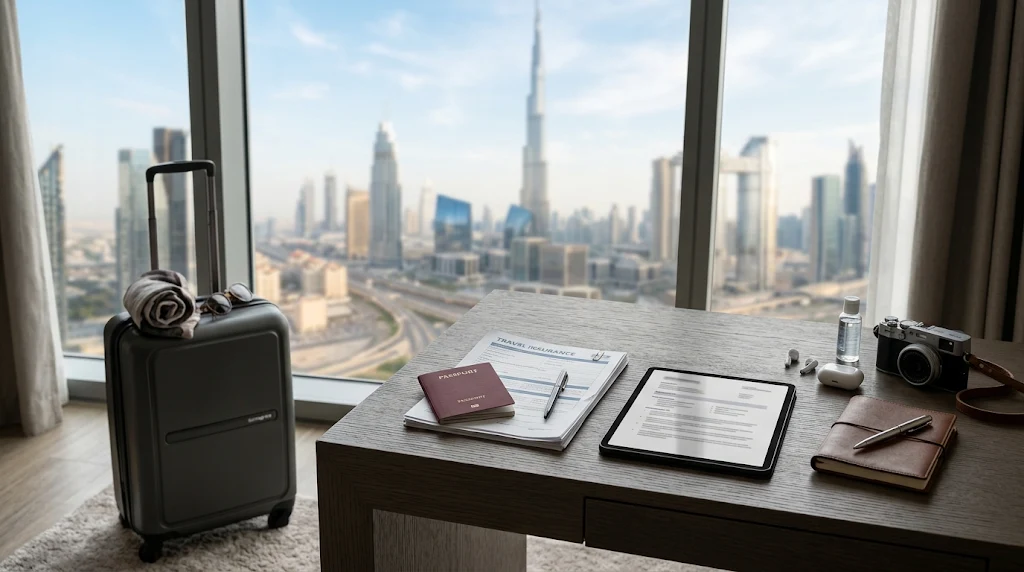
Planning a trip to the United Arab Emirates involves several important decisions. You need to arrange your flights, choose suitable accommodation, prepare your travel documents and decide which places you want to explore. However, there is another part of travel planning that should not be overlooked: understanding your travel insurance options.
Travel insurance may help protect you against certain unexpected expenses during an international trip. These could include eligible medical emergencies, travel disruptions, baggage problems and other situations covered by your policy.
However, not every insurance plan provides the same protection. Some policies focus mainly on medical emergencies, while others offer additional benefits for flight delays, trip cancellations and personal belongings.
If you are planning a holiday in Dubai, Abu Dhabi or another emirate, understanding your insurance policy before departure can help you make a more informed decision.
In this guide, you will learn how to compare UAE travel insurance for tourists, what coverage to check, which exclusions matter and what documents to keep during your journey.
1. Why Should Tourists Consider Travel Insurance for the UAE?
International travel can involve unexpected situations. Even a carefully planned holiday may be affected by illness, travel delays or problems with personal belongings.
For example, a visitor may need emergency medical attention, experience a qualifying flight disruption or discover that their checked baggage has been delayed.
Depending on the policy, travel insurance may help cover certain costs associated with these situations.
Some common reasons travellers consider insurance include:
- Protection against eligible emergency medical expenses.
- Assistance during certain travel disruptions.
- Coverage for qualifying baggage loss or damage.
- Financial protection for eligible trip cancellations.
- Access to emergency assistance services.
Travel insurance does not automatically cover every unexpected expense. The benefits depend on the policy wording, coverage limits and exclusions.
If you are preparing for your first visit, read our Dubai Travel Tips for First-Time Visitors guide for additional travel preparation advice.
2. What Does UAE Travel Insurance Usually Cover?
Before choosing a policy, understand the main types of coverage available. Different providers offer different combinations of benefits.
Emergency Medical Expenses
Medical coverage is one of the most important features to review when comparing international travel insurance.
Depending on the policy, it may cover eligible emergency medical expenses if you become ill or experience an unexpected injury during your trip.
Possible benefits may include:
- Emergency medical consultations.
- Eligible hospital treatment.
- Medical examinations.
- Prescribed medicines.
- Certain emergency medical services.
Check the maximum coverage amount and understand whether the insurer requires you to contact its assistance team before receiving certain treatments.
Emergency Hospitalisation
Some policies include coverage for eligible hospitalisation expenses.
However, the exact protection varies between insurance providers. A plan may have separate limits for hospital treatment, emergency consultations and other medical services.
Before purchasing a policy, check:
- The maximum hospitalisation limit.
- Whether emergency admission is covered.
- Whether approved medical facilities are required.
- Whether direct billing is available.
- Which documents are needed for reimbursement.
Do not assume that all hospital expenses will automatically be paid by your insurer.
Emergency Medical Evacuation
Some comprehensive travel insurance policies include emergency medical evacuation.
This benefit may help cover medically necessary transportation when a traveller needs to be moved to an appropriate medical facility or another location for treatment.
Check the policy carefully because eligibility, approval procedures and coverage limits can differ.
Trip Cancellation and Interruption
Unexpected circumstances may prevent you from starting a trip or completing it as planned.
Certain insurance policies cover eligible cancellation or interruption expenses when specific events listed in the policy occur.
Depending on the plan, these may include certain medical emergencies or other covered circumstances.
However, ordinary changes of mind and many personal travel decisions are not covered reasons.
Always read the list of accepted cancellation reasons before purchasing insurance.
Flight Delay and Missed Connections
A delayed flight can affect airport transfers, accommodation bookings and planned activities.
Some policies provide benefits for qualifying flight delays or missed connections.
These benefits may depend on:
- A minimum delay period.
- Official confirmation from the airline.
- Proof of additional expenses.
- The reason for the disruption.
- The insurer’s claim requirements.
For more information about arriving in Dubai and reaching your accommodation, see our Dubai Airport to City Guide.
Lost or Delayed Baggage
Baggage protection may help cover certain losses if your luggage is lost, damaged or delayed during an insured journey.
However, policies usually include limits and conditions.
For example, expensive electronics, jewellery and other valuable items may have special restrictions.
If your luggage does not arrive, contact the airline and obtain an official baggage report. Keep this document because the insurer may request it during the claim process.
Personal Belongings
Some plans also provide coverage for eligible personal belongings.
Before depending on this benefit, check:
- Which items are covered.
- Maximum payment limits.
- Requirements for proof of ownership.
- Rules for unattended belongings.
- Restrictions on expensive electronics.
This is particularly important if you are travelling with a camera, laptop or other valuable equipment.
3. What Is Usually Excluded From Travel Insurance?
Understanding exclusions is just as important as understanding the benefits.
An insurance policy may look attractive because it offers several benefits, but exclusions determine which situations are not covered.
Pre-Existing Medical Conditions
Some policies exclude medical conditions that existed before the insurance was purchased.
Other plans may offer limited coverage under specific conditions.
If you have an existing medical condition, ask the provider whether it is covered and request clarification before purchasing the policy.
Certain Adventure Activities
Some activities require additional coverage or may be excluded from standard plans.
Examples may include certain forms of scuba diving, skydiving and other adventure sports.
If you are planning a desert experience, check the policy before participating in activities such as dune-based adventures.
You can also explore our Dubai Desert Safari Guide when planning activities for your trip.
Unattended Personal Belongings
Some policies restrict claims involving belongings left unattended in public places.
Keep your valuables secure and understand the insurer’s requirements for reporting theft or loss.
Alcohol-Related Incidents
Certain policies exclude claims connected with intoxication or alcohol-related incidents.
The exact conditions depend on the policy wording.
Travelling Against Medical Advice
Some policies may exclude claims connected with travelling against medical advice or failing to follow relevant medical instructions.
Review the medical exclusions carefully if you have health-related concerns before departure.
4. How Much Travel Insurance Coverage Do You Need?
There is no single coverage amount that is suitable for every visitor.
Your insurance requirements may depend on:
- The length of your trip.
- Your age and personal circumstances.
- Your planned activities.
- Your medical coverage requirements.
- The value of prepaid bookings.
- Your ability to manage unexpected expenses.
A short holiday in Dubai may have different requirements from a longer family trip across several emirates.
Rather than choosing a policy based only on price, compare the actual coverage limits.
Pay particular attention to emergency medical expenses, evacuation, trip cancellation and baggage protection.
5. How to Compare UAE Travel Insurance Policies
Comparing insurance policies can help you understand what you are actually purchasing.
Use these steps before making a decision.
Step 1: Check Your Travel Dates
Confirm the date your trip begins and the date you expect to return.
Your policy should cover the relevant travel period. Check whether the coverage begins before departure or only after a specified time.
Step 2: Review Medical Coverage
Compare the medical coverage limits of different plans.
Check whether emergency treatment, hospitalisation and medically necessary transportation are included.
Also review any deductibles, excess payments or special conditions.
Step 3: Read the Exclusions
Never purchase a policy without reading its exclusions.
Pay attention to pre-existing conditions, adventure activities, unattended baggage and other restrictions that may affect your journey.
Step 4: Understand the Claim Process
Find out how the insurance provider handles claims.
Some situations may require you to contact the assistance team before arranging certain services.
Other claims may require receipts, reports or proof of expenses.
Step 5: Check Emergency Assistance
Look for clear emergency contact details and understand how to reach the insurance provider while travelling.
Check whether assistance is available during the hours you may need it and whether language support is provided.
Step 6: Compare the Total Price
A low-cost policy is not necessarily the best choice.
Compare the benefits, limits, exclusions and excess amounts alongside the premium.
Choose a policy that matches your travel needs rather than selecting an option only because it is inexpensive.
6. Travel Insurance for Families Visiting the UAE
Families travelling together should check that every member is included in the insurance arrangement.
Some providers offer family plans, while others require separate policies.
Before purchasing family coverage, review:
- Whether children are included.
- Whether every traveller is named on the policy.
- Age-related restrictions.
- Medical coverage for each family member.
- Existing medical condition rules.
- Baggage and cancellation benefits.
Do not assume that one person’s policy automatically covers everyone travelling with them.
If you are visiting with children, our Dubai with Kids Travel Guide can also help you plan family-friendly activities.
7. What Documents Should You Keep During Your UAE Trip?
Keeping important travel documents organised can make your journey easier.
Consider saving digital or printed copies of:
- Passport and relevant travel documents.
- Flight booking confirmation.
- Hotel reservation.
- Travel insurance policy.
- Insurance emergency contact details.
- Medical prescriptions, where applicable.
- Receipts for eligible travel expenses.
You should also keep your policy number somewhere accessible.
For additional preparation, check our Dubai Packing List before leaving home.
Avoid sharing sensitive personal documents unnecessarily and keep original documents secure.
8. What Should You Do If You Need to Make an Insurance Claim?
If an unexpected event occurs during your trip, follow the instructions provided by your insurer.
The process depends on the type of incident and the terms of your policy.
Generally, these steps may help:
- Contact the insurer’s assistance service when required.
- Follow the provider’s instructions.
- Keep medical reports and receipts.
- Obtain official airline documents for flight or baggage problems.
- Record the date and details of the incident.
- Submit the claim using the insurer’s required procedure.
For a medical emergency, seek appropriate medical assistance first. Do not delay urgent treatment while trying to contact an insurance provider.
Keep copies of all documents submitted with your claim.
9. Common Mistakes to Avoid When Buying Travel Insurance
Travellers sometimes choose insurance without checking the details.
Avoid these common mistakes:
Choosing Only by Price
The cheapest policy may have lower coverage limits or more restrictions.
Compare the benefits and exclusions before deciding.
Ignoring Medical Exclusions
Some policies have specific rules for pre-existing conditions and certain treatments.
Read these conditions carefully.
Forgetting to Check Activity Coverage
If you plan to participate in adventure activities, confirm whether your policy covers them.
Not Saving Emergency Contact Details
An insurance policy is less useful if you cannot quickly find the provider’s contact information.
Save the emergency number and policy documents before travelling.
Assuming Every Expense Is Covered
Insurance benefits are subject to conditions, limits and exclusions.
Read the policy wording instead of relying only on promotional descriptions.
10. Final Checklist Before Buying UAE Travel Insurance
Before completing your purchase, review this checklist:
-
Your travel dates are correct.
-
All intended travellers are included.
-
Emergency medical coverage is suitable.
-
Hospitalisation conditions are understood.
-
Medical evacuation coverage has been checked.
-
Trip cancellation benefits have been reviewed.
-
Baggage coverage limits are clear.
-
Planned activities are covered where required.
-
Exclusions have been read.
-
Emergency contact details are available.
-
Claim requirements are understood.
Completing this checklist can help you avoid overlooking important policy details.
Frequently Asked Questions
Is travel insurance mandatory for tourists visiting the UAE?
Requirements can depend on your visa category and individual circumstances. Check the latest official requirements applicable to your journey before travelling. Even where it is not mandatory, insurance may provide useful financial protection.
Does UAE travel insurance cover medical emergencies?
Some policies cover eligible emergency medical expenses, including certain hospital treatments. Coverage depends on the policy limits, conditions and exclusions.
Can I buy travel insurance before travelling to Dubai?
Many providers allow eligible travellers to purchase insurance before departure. Check the provider’s eligibility rules, coverage start date and purchase conditions.
Does travel insurance cover lost baggage?
Some policies include coverage for eligible baggage loss, damage or delay. Payment limits and documentation requirements vary.
Does travel insurance cover desert safari activities?
Coverage depends on the activity and policy wording. Some adventure activities may be excluded or require additional protection. Confirm this with the insurer before participating.
Can families purchase one travel insurance plan?
Some providers offer family plans, but eligibility and coverage conditions vary. Confirm that every family member is included in the policy.
What is the most important thing to check before buying travel insurance?
Review emergency medical coverage, policy exclusions, coverage limits and the claims process. These details help you understand what protection you are actually purchasing.
Conclusion
Travel insurance is worth considering when planning an international holiday in the United Arab Emirates. It may provide financial protection against certain unexpected medical and travel-related expenses, depending on the policy.
Before purchasing a plan, compare different options, review the exclusions and make sure the coverage matches your travel dates and activities.
Keep your insurance documents and emergency contact details accessible throughout your journey.
A little preparation before departure can help you travel with greater confidence and focus on enjoying your UAE holiday.